
As a mental health professional, your primary focus should be on providing quality care to your clients. However, the administrative burden of running a therapy practice can often feel overwhelming. From scheduling appointments and managing client records to processing payments and maintaining compliance, these tasks can consume valuable time that could be better spent with clients.
Fortunately, modern therapy practice management software has revolutionised how therapists handle their administrative responsibilities. The right software solution can transform your practice, making it more efficient, organised, and profitable while ensuring you maintain the highest standards of client care and data security.
The Modern Therapist’s Dilemma
Today’s therapists face unique challenges that didn’t exist decades ago. Digital natives expect online booking capabilities, secure messaging, and convenient payment options. There’s also an expectation for privacy and security of client details.
Without proper software support, many therapists find themselves spending a huge portion of their working hours on administrative tasks rather than client care. This not only affects their ability to serve more clients but can also lead to burnout and reduced job satisfaction.
Essential Categories of Therapist Software
1. Practice Management Systems
Practice Management Systems serve as the backbone of modern therapy practices. These comprehensive platforms integrate multiple functions into a single, cohesive system. The core features are:
- Centralised client database with secure record storage
- Appointment scheduling with automated reminders
- Treatment planning and progress tracking tools
- Insurance verification and claims management (depending on your country)
- Financial reporting and practice analytics
- HIPAA-compliant communication tools
Benefits: Practice Management Systems eliminate the need for multiple disconnected tools, reducing the risk of errors and saving significant time. They provide a 360-degree view of your practice operations, making it easier to identify trends, track outcomes, and make informed business decisions.
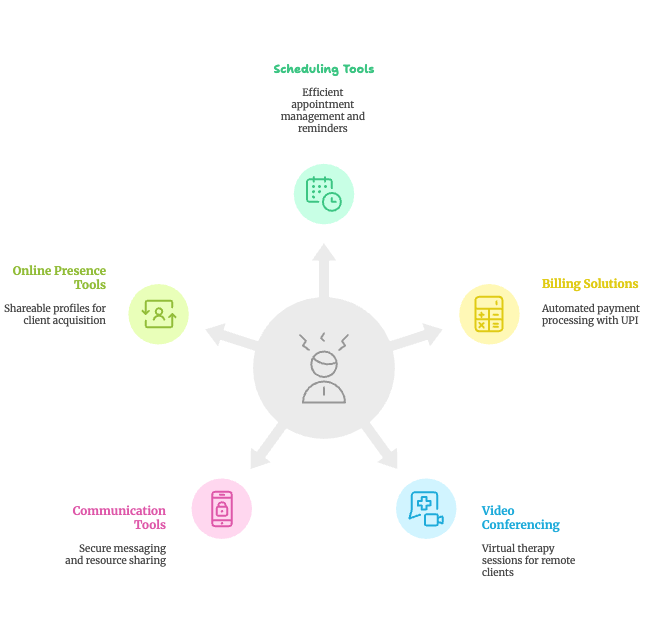
2. Scheduling and Appointment Management Tools
Efficient scheduling is crucial for maintaining a steady client flow and maximising revenue potential. Some essential features to call out are:
- Online self-scheduling for clients
- Calendar synchronisation across devices
- Automated appointment confirmations and reminders
- Waitlist management for cancelled appointments
- Group session scheduling capabilities
- Time zone management for virtual sessions
Impact on Practice: Automated scheduling reduces no-shows and eliminates the back-and-forth communication typically required for appointment booking. This leads to better client satisfaction and improved practice efficiency.
3. Billing and Payment Processing Solutions
Financial management is often the most challenging aspect of running a therapy practice, especially when dealing with insurance claims and various payment methods. Few critical components being:
- Automated insurance claims submission
- Real-time eligibility verification
- Payment processing for multiple methods (cards, bank transfers, digital wallets)
- Automated billing for recurring services
- Financial reporting and tax preparation support
Overall Benefit: Proper billing software can reduce admin hours and continuous back and forths thereby reducing overall stress and help improve client care.
4. Integrated Video Conferencing Platforms
The COVID-19 pandemic accelerated the adoption of video, making virtual therapy a permanent fixture in mental health care.
Therapeutic Advantages: Virtual therapy expands access to care for clients who face geographical, mobility, or scheduling constraints. It also allows therapists to maintain continuity of care during unexpected circumstances and potentially serve clients in multiple locations.
5. Client Communication Tools
Secure communication between sessions can enhance therapeutic outcomes and improve client engagement. Few key features to note:
- HIPAA-compliant messaging systems
- Appointment reminders and confirmations
- Homework assignments and resource sharing
- Crisis communication protocols
- Automated check-in surveys
- File sharing capabilities for assessments and worksheets
Therapeutic Value: Secure messaging allows for timely intervention and support between sessions while maintaining appropriate therapeutic boundaries. It also provides clients with easy access to resources and homework assignments.
6. BONUS: Shareable Profile Pages and Online Presence Tools
In today’s digital landscape, having a professional online presence is crucial for attracting new clients and building trust with potential patients. Shareable profile pages integrated within therapy software provide therapists with powerful marketing and client acquisition tools.
Client Acquisition Benefits: Shareable profile pages serve as powerful client acquisition tools that work 24/7. Potential clients can learn about your expertise, read about your approach, and even book appointments directly from your profile. This reduces the barriers to seeking help and can significantly increase your client referrals.
Professional Networking Value: These profiles also facilitate professional referrals from other healthcare providers, as colleagues can easily share your information with patients who might benefit from your specific expertise. Integration with professional directories and referral networks amplifies this effect.
Trust and Credibility Building: A well-crafted professional profile helps establish credibility and trust before the first interaction. Clients can feel more confident about choosing your services when they can see your qualifications, read your approach to therapy, and understand what to expect from working with you.
Key Features to Prioritise
1. Security and Compliance
Mental health records contain some of the most sensitive personal information, making security the top priority for any therapy software solution. Below are some essential security features:
- End-to-end encryption for all data transmission and storage
- Multi-factor authentication for user access
- Regular automated backups with disaster recovery options
- HIPAA compliance certification and business associate agreements
- Role-based access controls for multi-user practices
2. User Experience and Interface Design
Software that’s difficult to use will ultimately hinder rather than help your practice operations. Few usability considerations to note are:
- Intuitive navigation that requires minimal training
- Mobile-responsive design for access across devices
- Customisable workflows that match your practice style
- Quick data entry options to minimise documentation time
- Clear visual organisation of client information
- Efficient search and filtering capabilities
3. Integration Capabilities
Your software should work seamlessly with other tools you already use or may need in the future. Few important integrations being:
- Credit card processing services
- Calendar applications (Google Calendar, Apple Calendar)
- Email Integration
- Financial management capability
4. Scalability and Customisation
Choose software that can grow with your practice and adapt to your specific needs. Few scalability features are:
- Ability to add additional users and locations
- Flexible pricing models that match practice growth
- Customisable forms and templates
- Advanced reporting capabilities for larger practices
- API access for custom integrations
Ready to Simplify Your Practice?
Try PractiPal, a powerful, intuitive platform designed for modern therapists.


